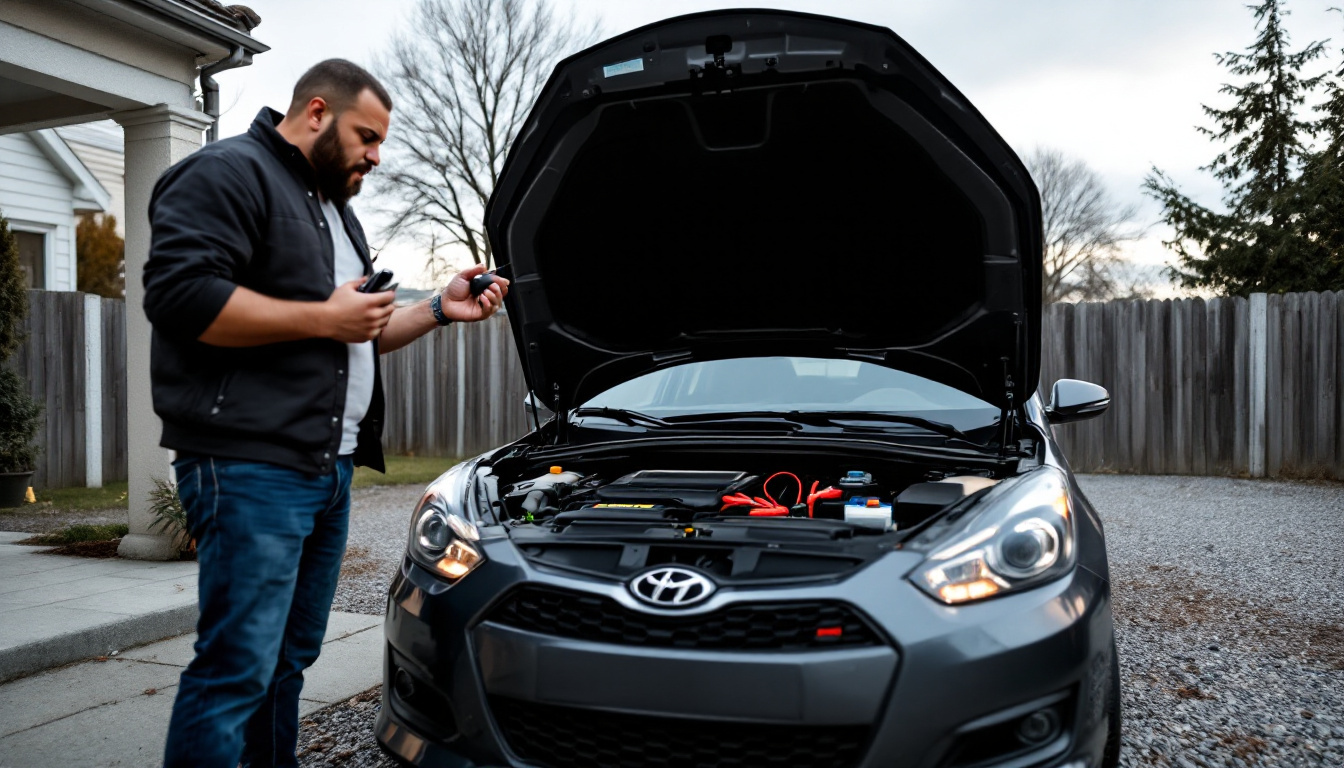
Car Will Not Start After a Battery Change? Key Sync Fixes in Aledo TX
Car won't start or key not detected after a battery replacement in Aledo TX? Why immobilizers lose sync, steering-lock quirks, what to try, and how we fix it.
Car Will Not Start After a Battery Change? Key Sync Fixes in Aledo TX
It is one of the most frustrating calls we get: the car was running fine, the battery died or got replaced, and now the engine will not start — with the dash flashing a key symbol, a padlock icon, or a "key not detected" message. The new battery tests perfect, the key worked yesterday, and nothing makes sense. The good news is that this failure is usually electronic housekeeping, not real damage, and it is fixable at your location. Call or text (817) 634-5045 and Aledo Locksmith can diagnose and re-sync keys and modules right in your driveway.
Modern vehicles keep security and convenience data in modules that expect uninterrupted power. Yank that power — or let it sag to nothing over a slow discharge — and some of that data gets confused or lost. This guide explains why immobilizers and body modules lose sync when the battery goes away, the steering-lock and fob-relearn quirks that trip owners up, what you can safely try yourself before calling anyone, and how a locksmith puts it all back together.
Quick Answer: Why Would a New Battery Cause a No-Start?
Disconnecting or fully draining the 12-volt battery interrupts modules that were never designed to power down mid-thought. Depending on the vehicle, that can scramble the handshake between the immobilizer and the engine or body control module, drop a keyless-entry fob out of its learned state, leave an electronic steering-column lock jammed in the locked position, or trip anti-theft logic that interprets the power loss as tampering. The engine, starter, and key are all fine — the security conversation between them has stalled.
Some of these states clear themselves with a simple relearn sequence or a few minutes of settling time. Others need a diagnostic tool to re-synchronize the immobilizer, re-register fobs, or reset a module before the car will accept its own keys again. Sorting one from the other is exactly what an on-site diagnosis is for.
What This Kind of Visit Costs Around Aledo
Because the fault can range from a two-minute relearn to a module re-sync, we quote by what the diagnosis finds. Typical local ranges:
| Service | Typical Price Range |
|---|---|
| On-site no-start diagnosis (key and immobilizer) | $70–$140 |
| Key or fob re-synchronization / re-registration | $90–$220 |
| Immobilizer or module re-sync with diagnostic tool | $150–$350 |
| Replacement fob if the original was damaged by the event | $150–$480 |
| Electronic steering-lock fault (evaluation) | Quote required |
Important: Final pricing depends on the year, model, and what the diagnosis actually uncovers — many of these calls resolve at the low end. Contact us with your VIN and symptoms for an accurate quote before dispatch.
The Usual Suspects After a Battery Event
The immobilizer lost its handshake
The immobilizer and the engine computer authenticate each other, and some vehicles store rolling security data that can fall out of step during an abrupt power loss. The result reads like a bad key: cranking with no start, or start-then-stall, with a security lamp lit. A diagnostic re-sync restores the handshake without replacing anything.
The fob dropped out of the keyless system
On a number of push-button-start vehicles, a dead 12-volt battery makes the car temporarily forget or ignore its proximity fobs. Often the fix is the built-in backup: hold the fob against the marked start button or set it in the designated pocket or slot so the car can read the chip directly, then start normally and let the system relearn. If the fob stays invisible after that, it needs re-registration with a tool.
The electronic steering lock is stuck
Many keyless vehicles lock the column electrically. If power vanished at the wrong moment, the lock module can wedge in a state where the dash shows a steering or key warning and the start button does nothing. Sometimes turning the wheel firmly toward center while pressing the brake and the start button lets it release; a stubborn one needs diagnostic attention, and a genuinely failed lock module is a repair rather than a relearn.
Convenience systems forgot their limits
Windows that stop one-touch working, sunroofs that only creep, throttle behavior that feels off at idle — these are relearn items, not faults. They are also a clue: if the small systems lost their memory, the security systems may have too, which supports the sync diagnosis.
What to Try Before You Call Anyone
Give it a settle-and-retry cycle
Confirm the new battery's terminals are clean and genuinely tight — a wobbly clamp mimics all of this. Then lock the car, walk away for ten minutes, unlock, and try again. A surprising number of modules recover after a full sleep-and-wake cycle.
Use the fob's emergency backup
Check the owner's manual for your car's backup start method: a slot in the console, a marked spot on the column, or touching the fob to the start button. This bypasses the weak-signal path and tells you whether the fob's chip is still trusted.
Try the second key
If your spare starts the car, the problem is the primary fob — likely its battery or registration — not the vehicle. That single test cuts the diagnosis in half, and it is a strong argument for owning a spare in the first place.
Do not keep cranking
Repeated long cranks on a car whose immobilizer is refusing authorization achieves nothing except heat and a drained battery. Two or three clean attempts is enough information.
How We Re-Sync Keys and Modules On-Site
A mobile visit starts with reading the vehicle's security and body modules to see which side dropped the handshake — key, immobilizer, steering lock, or body control module. From there we re-register the fobs or keys, re-synchronize the immobilizer with the engine computer where the platform requires it, and clear the anti-theft flags the power loss raised, verifying starts with every key you own before we leave. Ownership is verified first and security data is obtained through the industry's secure vehicle-data channels, the same way as on any key job. If the diagnosis instead points to a genuinely failed module or a deeper electrical fault, we say so plainly and you avoid paying for guesses.
Preventing the Problem Next Time
Use a memory saver during battery swaps
A memory-saver adapter — a small device that feeds the vehicle's electronics from a backup source through the OBD port or accessory socket while the main battery is out — keeps modules powered during the swap and sidesteps most of these sync losses entirely. Many shops use one routinely; if you change your own battery, it is a modest investment that pays for itself the first time it prevents a lockout.
Do not let a weak battery limp along
Most sync problems we see come not from clean battery swaps but from slow deaths — weeks of marginal voltage, repeated jump starts, and brownouts that confuse modules far more than a clean disconnect does. When a battery starts needing jumps, replace it promptly rather than riding it down to zero.
Know your backup start method before you need it
Every push-button vehicle has a dead-fob fallback, and the middle of a no-start is a bad time to learn yours. Find it in the owner's manual this week — slot, pocket, or fob-to-button — and try it once so the procedure is familiar.
Serving Aledo and the Rest of Parker County
Dead batteries do not pick convenient locations, so this is mobile work by nature. Aledo Locksmith covers Aledo 76008 along with Willow Park, Annetta, Hudson Oaks, Walsh, Weatherford, and Fort Worth West — home garages, office lots, and roadside spots across Parker County, same-day whenever the schedule allows.
Frequently Asked Questions
Why does my car say key not detected after I replaced the battery?
The power interruption can drop proximity fobs out of the keyless system's learned state. Try the vehicle's backup start method — holding the fob to the start button or placing it in the marked slot — and if the fob is still not seen, it needs re-registration with a diagnostic tool.
Can a dead battery ruin my key fob?
The fob itself is rarely harmed — it has its own small battery. What breaks is the synchronization between the fob and the vehicle. Re-registering the fob restores it; an actual fob replacement is only needed if the fob was already failing.
My steering wheel is locked and the start button does nothing. Is that related?
It can be. Electronic steering-column locks can jam in the locked state after an abrupt power loss. Turn the wheel gently toward center while pressing the brake and start button; if it will not release, the lock module needs diagnosis.
Do I need the dealership for an immobilizer re-sync?
Usually not. A mobile locksmith with current diagnostic equipment can re-synchronize immobilizers and re-register keys on most makes at your location, without a tow. A dealership visit makes sense mainly when the fault is a warranty-covered module failure.
Will disconnecting the battery again fix it?
Occasionally a controlled power cycle helps, but repeating the event that caused the problem is a coin flip, and on some vehicles it makes the lockout stricter. If one settle-and-retry cycle has not cleared it, diagnosis beats repetition.
How fast can you get to me in Aledo?
We are local, and no-start calls are prioritized because the car is stuck wherever it died. Most Parker County calls are handled same-day — call or text for a current ETA.
Car Refusing to Start After a Battery Change in Aledo?
Before you pay for a tow to a dealership, let us re-sync the keys and modules where the car sits. Aledo Locksmith diagnoses key-not-detected and immobilizer no-starts across Parker County.
Call or text (817) 634-5045 with your year, make, model, and what the dash is showing.
This article was written by the Aledolocksmith Automotive Locksmith Team.